
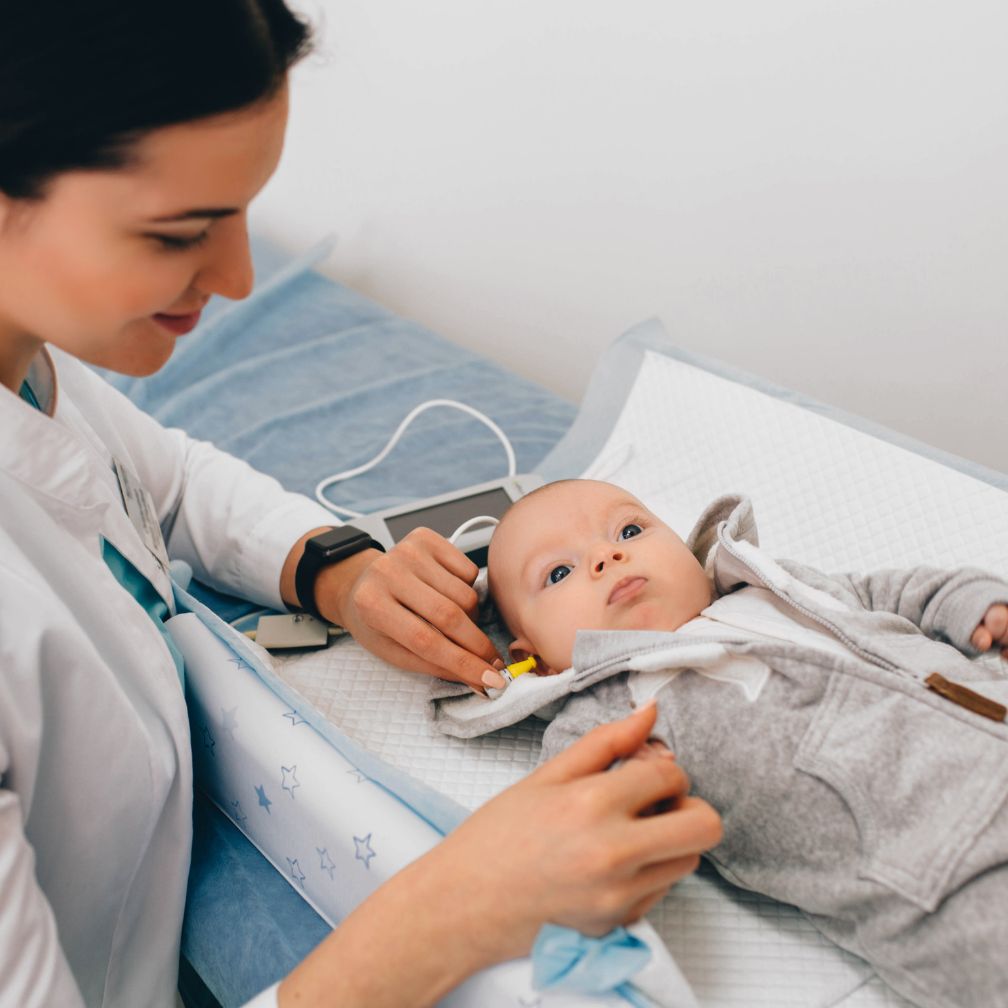
For new parents, learning that their baby shows hearing challenges routinely triggers immense shock and distress. Yet the optimistic truth is that via rapid screening and support, young children facing auditory deficits routinely attain remarkable achievements. Truly, these young ones can develop communication, interactive skills, and deep connections across their social world, resulting in a fulfilling life!
Utilizing individual hearing aids alongside surgical cochlear implants offers two exceptionally successful approaches for supporting infants with hearing loss. In the text below, we examine how these technologies function and how to decide which one is right for your child.
Analyzing Infant Auditory Deficits
Congenital hearing impairment in infants can develop due to specific root causes, such as:
- Inherited genetic factors (even when lacking a family history)
- Documented prenatal viral exposures like cytomegalovirus (CMV) or rubella
- Delivery difficulties, including acute oxygen deprivation or early birth
- Specific pharmaceutical treatments utilized inside specialized newborn intensive units
Which measure offers the greatest impact? Prompt clinical evaluation. Given these guidelines, newborns cared for in United States nurseries receive auditory evaluations before discharge from the hospital. Experienced pediatric audiologists strictly uphold the recognized “1-3-6” care benchmark:
- Officially screened by 30 days of life
- Officially diagnosed by 3 months
- Formal intervention (deploying corrective equipment or speech habilitation) established within 6 months
Satisfying these procedural steps provides infants their ideal path toward flourishing speech, language mastery, and neurological health. If you need further clarity regarding these auditory screens, your primary pediatrician remains ready to assist you!
Infant Hearing Aids: Overview & Benefits
When supporting infants with mild to severe hearing loss, custom hearing aids typically represent the initial treatment approach. These unobtrusive, external units boost overall volume levels, enabling babies to hear spoken dialogue and environmental sounds much more clearly.
Specialized infant-adapted hearing aids serve as:
- Exceptionally safe for direct use on newborns only a few weeks after birth
- Engineered using soft, comfortable ear molds that adjust alongside the infant’s growth
- Equipped with tamper-resistant battery latches and dedicated pediatric safety elements
- Professionally configured by a certified pediatric audiologist to accommodate your infant’s exact hearing needs
As your baby grows, their wearable units necessitate ongoing recalibration to maintain ideal acoustic output and ear-canal fit.
Cochlear Implant Options for Newborns
If a baby has severe to profound sensorineural hearing loss and doesn’t benefit enough from hearing aids, a cochlear implant may be recommended. Diverging significantly from traditional hearing devices, cochlear implant systems:
- Require precision surgical implantation within the inner ear structures
- Safely bypass damaged structures of the inner ear system
- Convert sound into electrical signals that stimulate the auditory nerve directly
Integrated cochlear implant systems serve as:
- Fully approved by the FDA for young children starting at 9-12 months of age
- Uniquely successful when reinforced by specialized rehabilitation and dedicated household support
- Advised exclusively after comprehensive clinical evaluations by a pediatric audiologist and ENT surgeon
That multi-step journey involves temporal bone imaging, specialized auditory testing, and realistic discussions regarding long-term developmental milestones.
Hearing Aids vs. Cochlear Implants: What’s the Difference?
- Mild to severe auditory decline uses Hearing Aids; Severe to profound hearing impairment calls for Cochlear Implants
- Non-Invasive acoustic positioning: Hearing Aids; Invasive surgical procedure: Cochlear Implants
- Physical sound amplification: Hearing Aids; Direct electrical signal generation: Cochlear Implants
- Fitting starts at early infancy: Hearing Aids; Implantation starts at 9-12 months: Cochlear Implants
Closing Perspective: Choosing Between Hearing Aids and Implants
In the event your infant receives a hearing loss diagnosis, remember that proven treatment choices and dedicated care teams are available. With the help of pediatric hearing specialists, numerous children grow to master language capabilities completely equal to their hearing peers.
Whether your child is a candidate for hearing aids or cochlear implants, early action can make a lifelong difference.
Are you seeking answers about your child’s overall hearing wellness? Call our clinic today to schedule a thorough assessment and individualized management strategy.