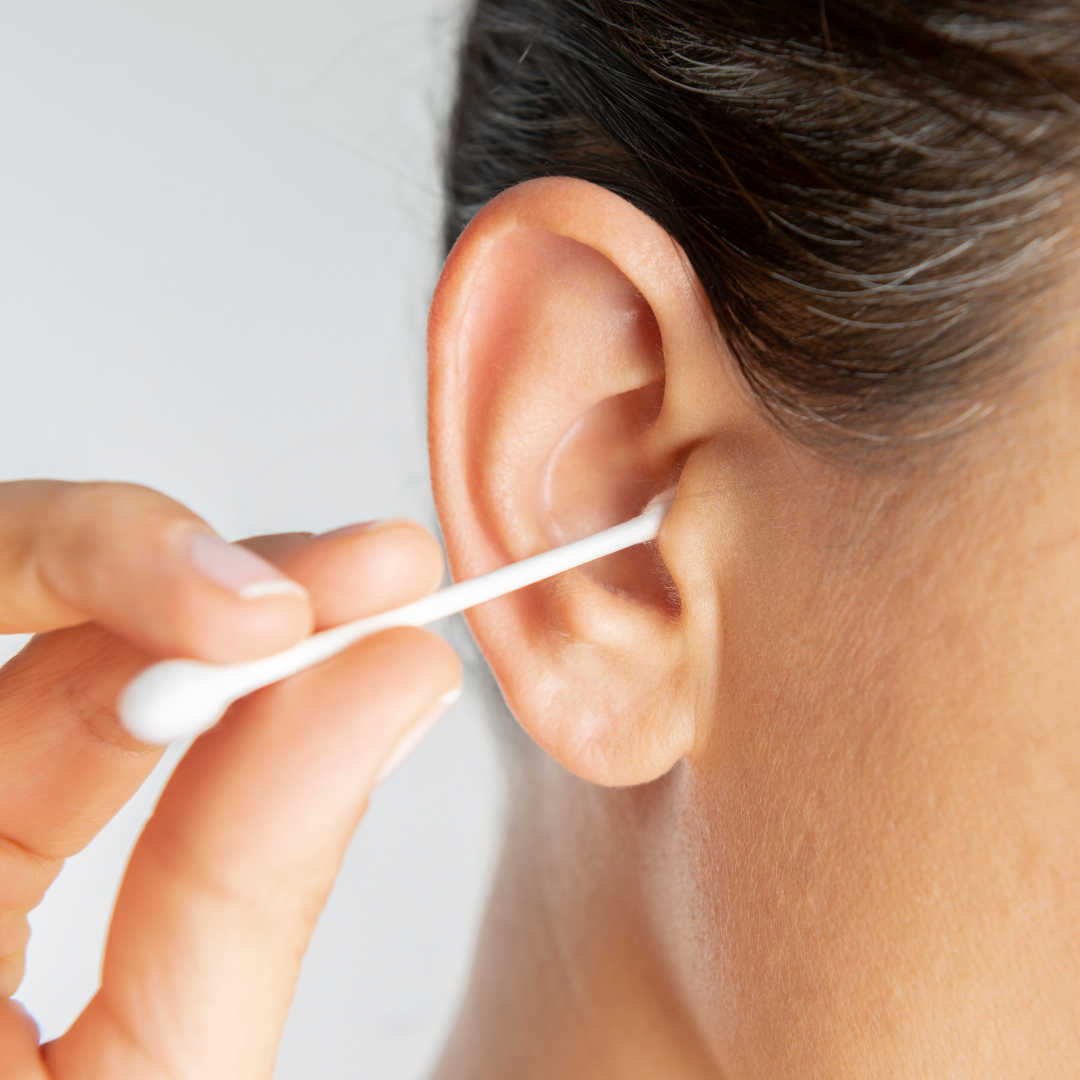
Although cotton swabs feel like accessible ear-care tools, introducing them into the canal hinders self-cleaning mechanisms and may harm your hearing. We assess whether your earwax demands professional intervention and provide customized care strategies that match your clinical profile. Routine manual hygiene is often unnecessary for ears; still, when excessive wax accumulates, we deliver safe and gentle removal solutions.
Why Are Q-Tips Bad for Your Ears?
Natural earwax, medically termed cerumen, does not represent bodily dirt. Cerumen works to entrap airborne particles, deter infectious pathogens, hydrate the auditory canal, and protect thin dermal layers. Jaw movement and normal skin migration gradually carry old wax toward the ear opening, where it flakes away or washes off during bathing.
Pushing a cotton applicator past the canal opening disrupts this natural physiological transport. Even if the swab gathers a trace of surface cerumen, it routinely compacts the remaining mass against the eardrum. Chronic swab insertion frequently compresses cerumen into a dense impaction, triggering a sensation of aural fullness that invites improper cleaning cycles.
Swabs can be safely applied along the outer ear cartilage, but they should never be inserted past the canal aperture.
Types of Ear Injuries Caused by Cotton Swabs
The skin lining the ear canal is thin and easily scratched. Microscopic tears cause acute discomfort or hemorrhage while exposing tissue to bacteria, which heightens the probability of an outer ear infection. There is also a risk that the cotton tip will detach and become stuck deep inside the auditory canal.
Swab-related clinical injuries include:
- Earwax compressed tightly against canal walls
- Epithelial lacerations, inflammation, erythema, or bleeding
- Acute otitis externa or canal infection
- Foreign matter or cotton material lodged in the ear
- Ruptured, torn, or perforated tympanic membrane
- Trauma inflicted on the ossicular chain behind the eardrum
- Temporary conductive loss or permanent auditory changes
- Ringing in the ears, balance disruption, or sharp ear pain
Though critical trauma is uncommon, an unexpected collision, a sudden slip, or overzealous penetration can cause extensive ear injury.
Recommended Schedules and Timelines for Cerumen Removal
Clinical extraction of earwax is not routinely required on a fixed schedule for most patients. Normal ears migrate cerumen toward the opening constantly, allowing routine bathing to cleanse the visible exterior. Aggressive hygiene removes protective lubricants, provokes skin inflammation, and heightens the likelihood of infection or cerumen buildup.
Cerumen removal is indicated when buildup obstructs the canal, hinders tympanic membrane visualization, degrades hearing aid performance, or generates symptoms.
How to Address Earwax Safely at Home
In the absence of earwax symptoms, allowing natural physiological clearance is universally the safest strategy. Simply cleanse the external ear using a damp, gentle washcloth, allowing the internal canal to clear independently.
If hardened wax requires softening, we can guide you toward over-the-counter cerumenolytics or drops featuring mineral oil, carbamide peroxide, glycerin, or saline. Use only the labeled amount and for the labeled duration. Stop treatment promptly if the drops elicit sharp pain, noticeable dizziness, allergic rash, or worsening hearing complaints.
At-home ear flushing is not suitable for all ears and demands prior clinical verification and step-by-step guidance from a provider. Never utilize motorized oral irrigators or dental water devices in the ear canal. Do not use dangerous devices like ear candles, metal scrapers, endoscopic camera tools, hairpins, or unverified suction units. These questionable products can burn sensitive tissues, lacerate the canal, rupture the eardrum, or compact wax deeper.
Recognizing When Earwax Requires Clinical Intervention
Set up an audiological evaluation whenever your ear stays plugged after softening care, wax is firmly impacted, or home efforts fail repeatedly. Seeking professional care is essential if a patient cannot stay still, exhibits narrow canal anatomy, wears hearing aids, or possesses medical risks that rule out drops or flushing.
Arrange an immediate clinical evaluation for:
- Sharp ear pain, chronic itching sensations, or localized tenderness
- Blood, cloudy purulence, clear fluid leaks, or foul-smelling ear discharge
- Elevated body temperature or edema surrounding the ear structures
- New tinnitus or dizziness
- Acute sensorineural hearing loss or auditory decline persisting after cerumen extraction
- A possible eardrum perforation or cotton fragment trapped inside
- Repeated wax accumulation that impairs prescription hearing devices
Regard sudden unilateral hearing loss as a time-sensitive medical emergency instead of presuming it is earwax. Prompt testing can distinguish a blockage from a time-sensitive inner-ear problem.
Professional Techniques for Cerumen Removal
The clinical process starts with high-magnification otoscopy or microscopy to establish cerumen presence and screen for infections, abrasions, or tympanic perforations. The safest removal method depends on wax consistency, canal anatomy, medical history, previous surgery, and the patient’s ability to tolerate the procedure.
In-office clinical procedures include:
- Medical-grade wax softeners administered prior to or during the procedure
- Safe low-pressure irrigation using body-temperature solutions on intact tympanic membranes
- Safe, gentle suction extraction executed under direct microscopic guidance
- Precision manual debridement using sterile ear curettes, loops, or specialized forceps
Visual guidance empowers the clinician to protect delicate canal skin and pause immediately if sensitivity is detected. Utilizing more than one removal technique may be necessary to resolve dry or severely compacted wax. After removal, the ear can be reexamined to confirm that the canal and eardrum are healthy. When symptoms like fullness, tinnitus, vertigo, or hearing loss continue, supplementary audiological assessments can uncover alternate conditions.
Request an Appointment for Clinical Earwax Removal
If you notice a blocked sensation or changes in auditory clarity, contact us for an evaluation rather than inserting a Q-Tip. The diagnostic session entails reviewing your symptom timeline, past otologic procedures, hearing aid usage, past home treatments, and risk factors for recurring cerumen. Contact our office directly to book your safe cerumen-removal appointment.